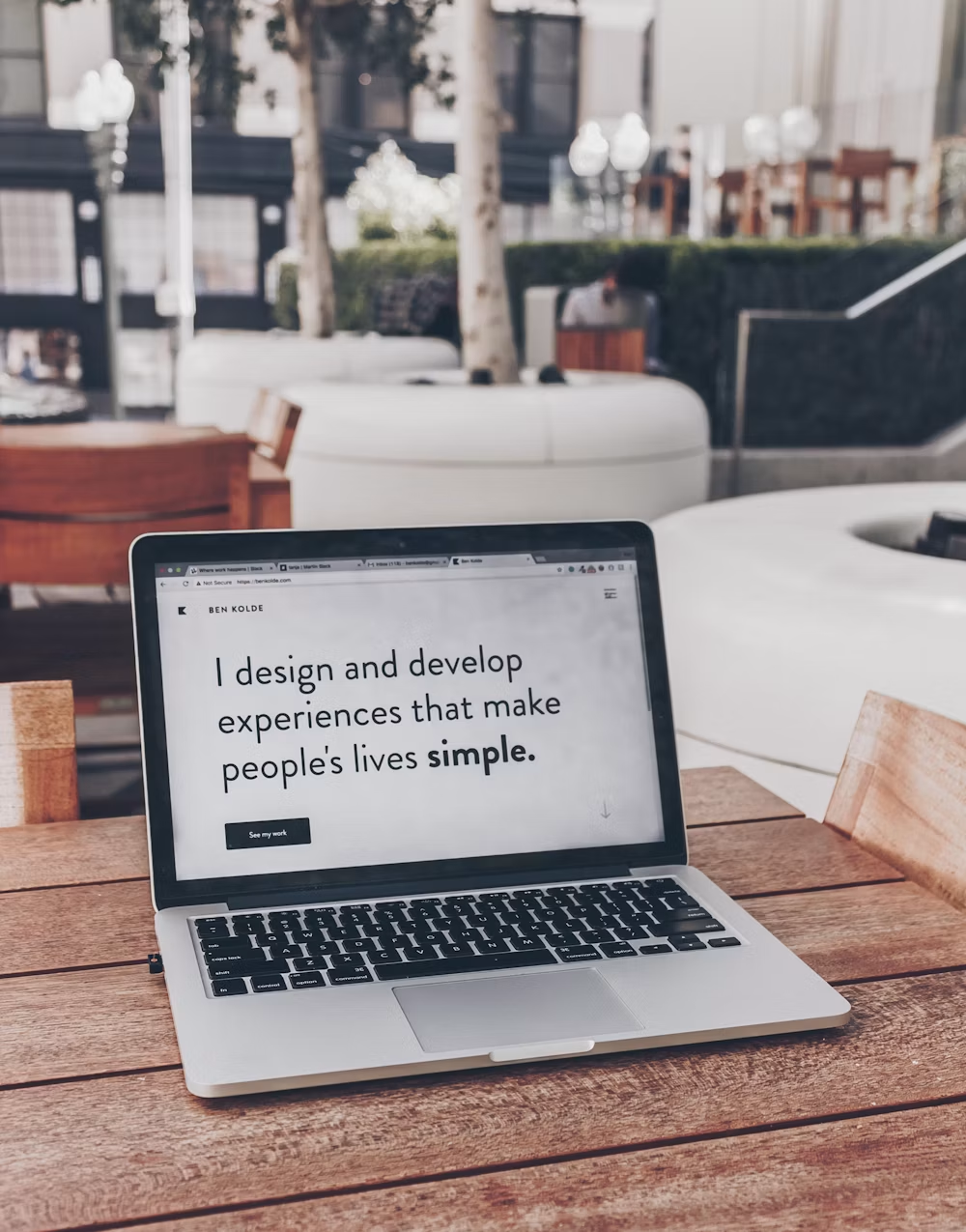
How to Build a Portfolio that Gets You Hired
In today’s job market, having a degree or a list of skills isn't enough. Whether you are a UI/UX Designer or a Full-Stack Developer, your portfolio is your most important asset. It is your "Proof of Work."
However, most people make the same mistake: they only show the final result. Recruiters don’t just want to see a "pretty" design or a "working" app—they want to see how you think.
1. Quality Over Quantity
One of the biggest mistakes juniors make is putting 10-15 projects in their portfolio.
The Rule: Only show 3 to 4 high-quality projects.
Recruiters usually spend less than 3 minutes on your site. If they see 10 average projects, they will think you are an average worker. If they see 3 amazing projects, they will think you are an expert.
2. The Power of the "Case Study"
Don't just post screenshots. Every project should be a "Case Study." This means explaining:
The Problem: What was the challenge? Who was the user?
The Process: Show your sketches, your messy code, or your Figma wireframes. Show how you failed and how you fixed it.
The Solution: Show the final result and explain why it works.
The Result: Did it increase sales? Did it make the app faster? Use numbers if you can.
3. Make it "Scannable"
Recruiters are busy. They don't want to read a 2,000-word essay.
Use Big Headings.
Use Bullet Points.
Use Bold Text for important keywords.
Make sure your Resume is easy to find (usually a "Download PDF" button in the top right corner).
4. Show Your "Human" Side
The "About Me" page is often the second most visited page on a portfolio. People hire people, not robots.
Mention your hobbies.
Talk about why you love design or code.
Share what you are currently learning. This shows you have a "Growth Mindset."
5. Technical Performance
If you are a developer, your portfolio itself is a test of your skills.
Is it fast? (Use small images!)
Is it responsive? (Does it look good on mobile?)
Is the code clean? (If you host it on GitHub, make sure your "ReadMe" file is professional.)
Conclusion
Your portfolio is never "finished." It is a living document that grows with your career. Start with one solid project, document your process, and keep refining it. Remember: Your portfolio's job is not to get you the job—its job is to get you the interview.